
Knee Pain Treatment in Singapore
Knee pain has a way of becoming part of your routine before you realise how much it is limiting you. You adjust how you walk, avoid certain stairs, and stop doing the things you used to enjoy.
Getting the right knee pain treatment starts with a structured assessment. We’re ready to help at T&T Medical Group.
What Are the Common Causes of Knee Pain?
Knee pain is not a single condition. It is a symptom that can arise from a range of underlying causes, each requiring a different approach to treatment. A thorough diagnosis is essential before any treatment plan is recommended.
Degenerative Conditions
Degenerative conditions are among the most common causes of knee pain in adults, particularly those over forty.
- Osteoarthritis (a condition in which the cartilage that cushions the knee joint gradually breaks down) is the most frequently seen, causing pain and stiffness.
- Osteoporosis (a condition that weakens bones and increases the risk of fracture) may also contribute to knee problems, particularly in older patients.
Injuries and Trauma
Knee injuries can occur suddenly through accidents, falls, or physical activity. Common examples include:
- Ligament tears such as injuries to the anterior cruciate ligament (ACL)
- Meniscal tears, which involve damage to the cartilage pads between the knee bones
- Fractures, which are breaks in one or more of the bones that form the knee joint
Inflammatory Conditions
Inflammatory conditions affect the tissues in and around the knee joint, causing swelling, warmth, and pain. These are two of the more common inflammatory causes of knee pain, and often require systemic management alongside localised treatment:
- Rheumatoid arthritis: in which the immune system attacks the joint lining
- Gout: a condition caused by a build-up of uric acid crystals in the joint
When Should You See a Knee Pain Specialist?
Many people manage mild knee discomfort with rest and over-the-counter pain relief. However, you should see a knee pain specialist in Singapore if you experience any of the following:
- Knee pain that has persisted for more than a few weeks without improvement
- Significant swelling, redness, or warmth around the joint
- A feeling of instability, buckling, or the knee giving way
- Inability to bear weight on the affected leg
- A locking or catching sensation when moving the knee
- Fever alongside joint pain, which may indicate infection
- Pain that is worsening progressively despite rest
These symptoms may indicate a serious underlying condition that requires prompt evaluation. Book a consultation with our team, and we can assess your knee and talk through your options.
How Is Knee Pain Diagnosed?
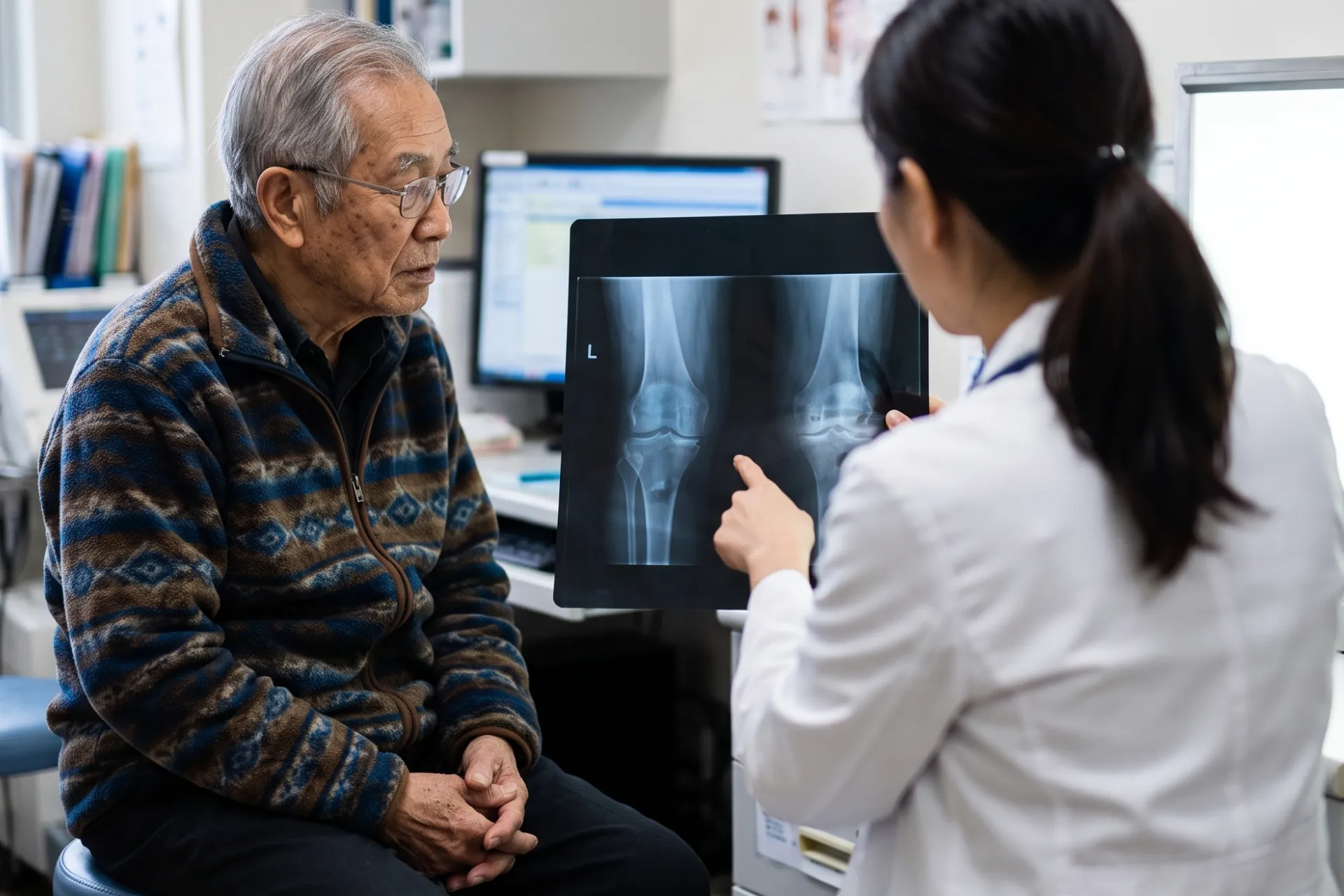
An accurate diagnosis is the foundation of effective knee pain treatment. At T&T Medical Group, assessment typically begins with a clinical consultation in which your doctor will take a detailed history of your symptoms, how the pain started, and how it has changed over time.
Depending on your presentation, investigations may include:
X-Ray
To assess bone structure, joint spacing, and signs of degenerative change
MRI
To evaluate soft tissue structures including ligaments, tendons, and cartilage
Ultrasound
To assess soft tissue conditions and guide injection procedures
CT-Scan
To provide detailed cross-sectional imaging where needed
What Are the Treatment Options for Knee Pain?
Treatment for knee pain depends on the underlying cause, the severity of your condition, and your individual circumstances. We will discuss the most appropriate options based on your diagnosis.
Conservative Treatments
Conservative treatments are usually the first line of management and aim to reduce symptoms and improve function without procedures or surgery.
These may include:
- Physiotherapy
- Activity modification
- Weight management
- Oral pain relief or anti-inflammatory medications
Injection-Based Therapies
Where conservative treatments have not provided sufficient relief, injection-based therapies may be considered.
Options include:
- Corticosteroid injections to reduce inflammation
- Hyaluronic acid gel injections to supplement the natural lubricating fluid in the joint
- Platelet-rich plasma (PRP) and Autologous Protein Solution (APS) injections, prepared from the patient's own blood.
Surgical Options
Surgery is generally considered when conservative and injection-based treatments have not provided adequate relief, or when there is structural damage requiring direct intervention.
Options include:
- Arthroscopy (a minimally invasive procedure to assess and treat internal joint problems)
- Ligament reconstruction
- Partial or total knee replacement
Why Choose T&T Medical Group for Knee Pain Treatment?
Our approach to knee pain treatment is built around accurate diagnosis, with on-site imaging and a range of both conservative and injection-based treatment options available under one roof.
A few things that are worth knowing:
On-site diagnostics
X-ray, MRI, CT scan, and ultrasound are available and provided by partnering imaging facilities within the same building.
A dedicated Osteoporosis Centre
For patients whose knee pain is related to bone density concerns, our Osteoporosis Centre provides specialist screening, education, and support.
Physiotherapy available on-site
Physiotherapy is available at the same location, supporting both conservative management and post-injection rehabilitation where needed.
Part of LYC Healthcare Group
T&T Medical Group is a subsidiary of LYC Healthcare Berhad, which has been providing medical treatment since 1989.
Disclaimer: Diagnostic imaging services are provided by partnering imaging facilities within the same building, but no longer provided in-house.
Take the First Step Towards Treating Your Knee Pain
Living with knee pain does not have to be the default. Whether your symptoms have come on gradually or followed an injury, a consultation is a reasonable and low-commitment first step.
There is no obligation at an initial visit, just a conversation about your symptoms, what the assessment involves, and what treatment options may be suitable for you.
Call us at +65 6293 4071 to speak with our team directly.
Frequently Asked Questions
Knee pain that persists beyond a few weeks, is accompanied by significant swelling or instability, or follows an injury should be assessed by a doctor. Pain that is worsening over time or affecting your ability to bear weight warrants prompt attention.
In many cases, yes. Conservative treatments such as physiotherapy, activity modification, and medication help many patients manage their condition effectively. Injection-based therapies offer an additional option for more targeted relief. Surgery is generally reserved for cases where other approaches have not provided adequate improvement.
This depends on your insurer, the specific treatments recommended, and your policy terms. MediSave use for outpatient treatments is subject to Ministry of Health guidelines. We recommend speaking with our team directly, as eligibility varies by individual and by the treatment plan recommended.
No referral is required. You are welcome to contact us directly to arrange an initial consultation.